




Search
Inc. VAT Ex. VAT
Inc. VAT
All Categories
    Menu Close
    RSS

    Blog

    The Key Benefits of a Riser Recliner
    (0) The Key Benefits of a Riser Recliner

    Your OT may have recommended a specialist chair, in this instance a riser recliner, or you may have seen one in a friend’s house.

    You probably have your favourite chair, and it probably provides some level of support, but you should consider the following three questions:

    1. Do you find it difficult to sit down or get up?

    2. Do you need extra support?

    3. Do you sit in the same chair for long periods?

    With those questions in mind, a riser recliner is good in two ways:

    1. The rising action helps you sit down and stand up.

    2. The reclining action can make you more comfortable, especially if you are sitting down for a lot of the day.

    This can help with some medical problems. If it’s difficult to sit down and stand up, you may need someone to help you all day (or you may end up in the same chair all day). Or if you can’t get comfortable, you may end up staying in bed. A riser recliner will help you to achieve a level of comfort and most importantly, remain independent in your own home.

    Riser Recliner chairs are a fantastic product to enhance not only your lifestyle, but also your wellbeing. As well as providing great comfort, Riser Recliners assist in alleviating many symptoms from a range of common health problems and can also help with circulatory problems like pain, breathlessness, and stiff joints.

    To get the best out of your chair, you should use the functions (recline or raise facility) when you need them the most. On good days you may be more capable of sitting and standing from your chair in a more usual manner.

    Do this whenever you can as it will help you retain strong muscles and bones. On bad days however, let the chair assist you to keep active and reduce any painful symptoms you experience.

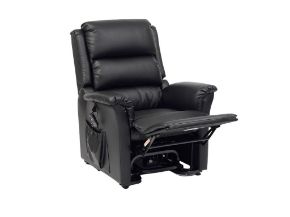
    Here are the two main functions of the Riser Recliner: Rising and Reclining

    Rising

    All riser recliners work on the same basic principle - you press a button on a hand control and the seat and arms (usually the whole chair) slowly raises you up so you can stand. Sitting down goes the other way - you position yourself on the raised seat and press a button and the seat goes down slowly. You should still keep your hands on the arm rests. Usually, the seat tips forward as well as going up, to help you get out. For some people, who have weak legs or difficulty controlling their legs, this makes things harder, or just a bit scary.

    Reclining

    Reclining chairs are good because they let you get your feet up and lie back for a rest. You can also get yourself comfortable in different positions for different things (reading, watching TV, etc). If you are sitting down for long periods of time, a recliner is also useful because you can easily keep changing your position, which stops you from getting uncomfortable and sore. For some medical problems affecting the legs, it helps to be able to lift your legs up when sitting.

    If you have any questions about Riser Recliners in general, please consult with your Occupational Therapist or call us on 0818 959 353 where one of our team will help you.

    Thanks to the Research Institute for Disabled Consumers for their research on Riser Recliners.

    For the month of April only, we have a limited supply of the excellent and great value Star Riser Recliner. For only €699, it's the best value Riser Recliner in Ireland. Click here to buy.

    Benefits of Using a Pedal Exerciser
    (0) Benefits of Using a Pedal Exerciser

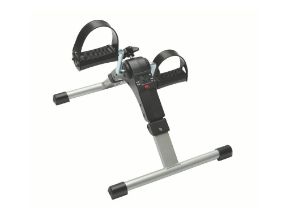
    If you are recovering from an injury or have mobility challenges, a pedal exerciser will allow you to exercise in a safe and productive way. Key to pedal exercisers is their low impact; they are stationary, and they exert very little impact on your knees and joints. So, they are a perfect companion if you are recovering from injury and are unable, yet, to get back to your regular training routine. If mobility issues such as backache, joint ache, or arthritis are challenging you, the pedal exerciser is ideal to help you maintain an exercise routine. All from the comfort of your home.

    The pedal exerciser will help you in four key areas:

    1. Circulation - the physical activity is good for your circulation.
    2. Coordination - the gentle and repetitive activity of using the pedal exerciser improves coordination. 
    3. Muscle strength - stay active and maintain muscle mass and strength.
    4. Range of motion - the arc of the pedal exerciser will improve your flexibility.

    The pedal exerciser is small and portable and can be used anywhere in your home or indeed, can be taken on holidays so that you maintain your exercise routine. As your training progresses, you can adjust the pedal resistance so the effort required to pedal can be increased or decreased if required.

    There is no assembly required as the pedal exerciser comes completely assembled in a neat foldable design and is ready to use.

    If you're not sure, then check out these 10 reasons why you should use a pedal exerciser:

    1. Improves blood circulation and metabolism.
    2. Lowers and maintains blood pressure.
    3. Positive impact on coordination.
    4. Strengthens and tones muscles on upper and lower body - important in preventing sarcopenia.
    5. Proven to be of benefit to rehabilitation from injury.
    6. 30 minutes a day is great for burning calories and assists with weight management.
    7. Regular exercise is known to improve sleep.
    8. An easy habit that is healthy and maintains your exercise regime.
    9. Gentle, regular exercise reduces the risks of Arthritis.
    10. Take it anywhere so you never have to miss your training / exercise / workout.

    Please click here to purchase your own Digital Pedal Exerciser. 

    Mobility Scooter And Wheelchair Information – Legalities And Categories
    (0) Mobility Scooter And Wheelchair Information – Legalities And Categories

    Researching and buying a mobility scooter or deciding on the right wheelchair can be a tough process and requires some research. The following information has been put together to ensure that you can feel secure in your purchase.

    Firstly, we should note that there are no differentiating factors between self-propelled and powered wheelchairs / mobility scooters in Irish Law.

    In the UK, wheelchairs and mobility scooters are categorised into three classes. It is useful to look at these classes as they will help differentiate different products available in the Irish market.

    Travelling Around Ireland with a Mobility Aid
    (0) Travelling Around Ireland with a Mobility Aid

    Mobility aids provide an excellent service to their users and make it accessible for them to travel across the road or even across the globe.

    When people have a love for travel, it shouldn’t have to suffer just because they are struggling with mobility or increasing age. Mobility aids help to give them back their confidence and allow them to continue to travel with friends or families. We are very lucky to live in such a beautiful country with many historic and scenic attractions that are suitable for all ages and all levels of movement.

    When you’re travelling around Ireland with a mobility aid, there are a few simple factors that should be considered.

    Destination: Most of Ireland is reachable if you are travelling by car or public transport, and the majority of all towns will have some form of accommodation, especially if it is serviced by public transport. The problem you may face however, will be the accessibility of the room you will be in or the floor it is on.

    If you need a walking aid or wheelchair, you may need a spacious room to comfortably move around in your wheelchair or rollator. And if the accommodation does not have a lift to the higher floors, you will need a ground floor room. When you’re booking your accommodation you will need to make it known to the travel agency/receptionist or booking company so they can accommodate your needs.

    Type of transport: You will need to have a plan in place, so you know how you are getting around. If you are driving your car, ensure you leave enough room inside your boot/back seat to store your rollator, wheelchair or walking frame. The majority of these aids can be folded down into a flat-like position for ease of storage. The folding mechanism is also very helpful if you are using public transport.

    Most buses will either have a storage compartment in the aisle or an underneath storage bay where people store suitcases, bikes and other large belongings. When travelling on a train, there are areas in each carriage where personal belonging such as scooters, rollators can be stored. If you are travelling on a train with a wheelchair or powered scooter, it must be booked in advance with a minimum of 24 hours if you need a ramp to assist you with boarding the train. Remember, there are a limited number of wheelchair accessible spaces on trains, so when you can, pre-book your tickets.

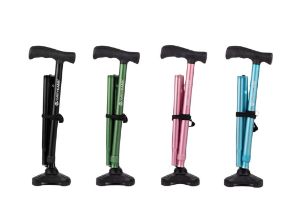
    Attractions: If you need to use a mobility aid when going to attractions, it is important that you contact the organisers where possible to make them aware that you are using one. If you are visiting the likes of a cave or somewhere with unsteady terrain, you should ask them if it is possible to go to the attraction when using a rollator, scooter or wheelchair or if you use a walking stick/cane, maybe a hurrycane would be best with the three-point base. You should also make them aware if you have a partner, friend or carer attending with you so they know you are not alone if you need assistance. When researching different tourist spots, if possible you should read reviews to see if other people with mobility aids have visited and how they got on. Always make sure where you are going is suitable for people with limited or no mobility.

    Rest: Although you may be on an active holiday, exploring areas you have never been before, tasting different cuisine or educating yourselves with historic landmarks, it is important that you also take time to rest. Travelling can be exhausting and the last thing you want is to be too tired to go sightseeing. The days of arrival and departing can be very tiring if it is a long trip and you never stopped for some fresh air or to stretch your legs. It is vital that if you are fatigued after your trip that you take time to rest and recover so you can fulfil your to-do list with lots of energy. If you are going to be on day trips where you will be pushing your rollator or wheelchair for a long time, that you give your arms time to recover too as the extra exercise will cause them to be tired, especially the day after. If someone else is pushing you in your wheelchair, be conscious that they also need time to rest their arms and prepare for the next day/trip.

    Packing: When planning your holidays, it will more than likely be an overnight stay which means you need to pack a bag. If you are arranging an active trip to go see historical or scenic landmarks, you should be comfortable in what you are wearing. You should pack loose clothing, as tight clothing may affect your mobility depending on the activities you are doing. Wear comfortable footwear as you don’t want to be suffering from sore feet, which may prevent you from completing your holiday to-do list. Because we are in Ireland, you can never go wrong with packing a coat as the Irish expression goes, ‘if you don’t like the weather, wait ten minutes.’

    If you travel regularly, it is worth investing in a good quality, durable wheeled luggage case which is well-balanced and with quality wheels – if you ask any seasoned traveller, they will tell you this is money very well spent. Don’t pack too much as closing the case can be troublesome, plus you may need extra room for some spontaneous holiday purchases.

    Medical Equipment: If you are on any medication or require medical equipment e.g. a CPAP machine, you should always bring it with you. When packing your car, always make sure the bag that has the medication in it is easy to reach in case of an emergency. You should carry a medical letter from your doctor stating a list of the medicine you are currently on, and if needed, bring a new prescription in case anything happens to your bags and you need to get more medicine.

    Aids for Daily Living: If you require specific aids for daily living, you should store these safely so they don’t get damaged as you may need them daily. If you are travelling by car to your destination, and you are planning stops along the way for food or tourist sites, you should have them readily available so you can quickly get them out for use. Likewise, if you are travelling by public transport, it may be worthwhile to have a small bag or satchel with the daily living aids you may require, so they are easily accessible.

    Some of Ireland’s top accessible friendly attractions are the Irish National Stud & the Japanese Gardens, Dublin Zoo, Powerscourt Estate, House & Gardens, Seamus Heaney HomePlace, Newgrange Stone Age Passage Tomb at Boyne Valley, Fota Wildlife Park and the National Museum of Ireland.

    Once you take time to consider all of these factors and make the accommodation, travel and tourist attractions aware of your arrival in advance, there should be no reason that you cannot enjoy your Irish holiday. These factors are tips to make it as stress-free as possible and we hope they help you.